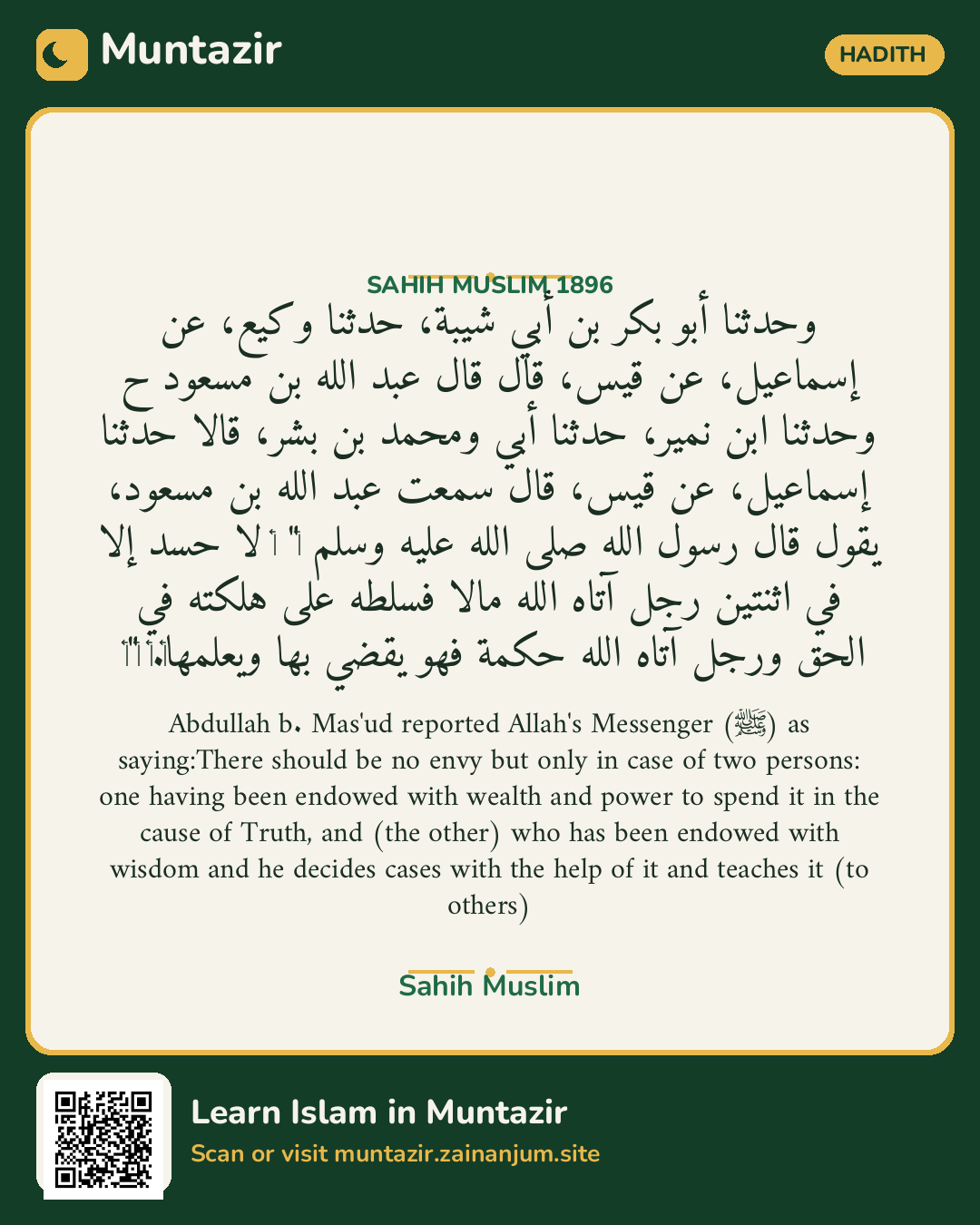
وَحَدَّثَنَا أَبُو بَكْرِ بْنُ أَبِي شَيْبَةَ، حَدَّثَنَا وَكِيعٌ، عَنْ إِسْمَاعِيلَ، عَنْ قَيْسٍ، قَالَ قَالَ عَبْدُ اللَّهِ بْنُ مَسْعُودٍ ح وَحَدَّثَنَا ابْنُ نُمَيْرٍ، حَدَّثَنَا أَبِي وَمُحَمَّدُ بْنُ بِشْرٍ، قَالاَ حَدَّثَنَا إِسْمَاعِيلُ، عَنْ قَيْسٍ، قَالَ سَمِعْتُ عَبْدَ اللَّهِ بْنَ مَسْعُودٍ، يَقُولُ قَالَ رَسُولُ اللَّهِ صلى الله عليه وسلم " لاَ حَسَدَ إِلاَّ فِي اثْنَتَيْنِ رَجُلٌ آتَاهُ اللَّهُ مَالاً فَسَلَّطَهُ عَلَى هَلَكَتِهِ فِي الْحَقِّ وَرَجُلٌ آتَاهُ اللَّهُ حِكْمَةً فَهُوَ يَقْضِي بِهَا وَيُعَلِّمُهَا " .
Abdullah b. Mas'ud reported Allah's Messenger (ﷺ) as saying:There should be no envy but only in case of two persons: one having been endowed with wealth and power to spend it in the cause of Truth, and (the other) who has been endowed with wisdom and he decides cases with the help of it and teaches it (to others)