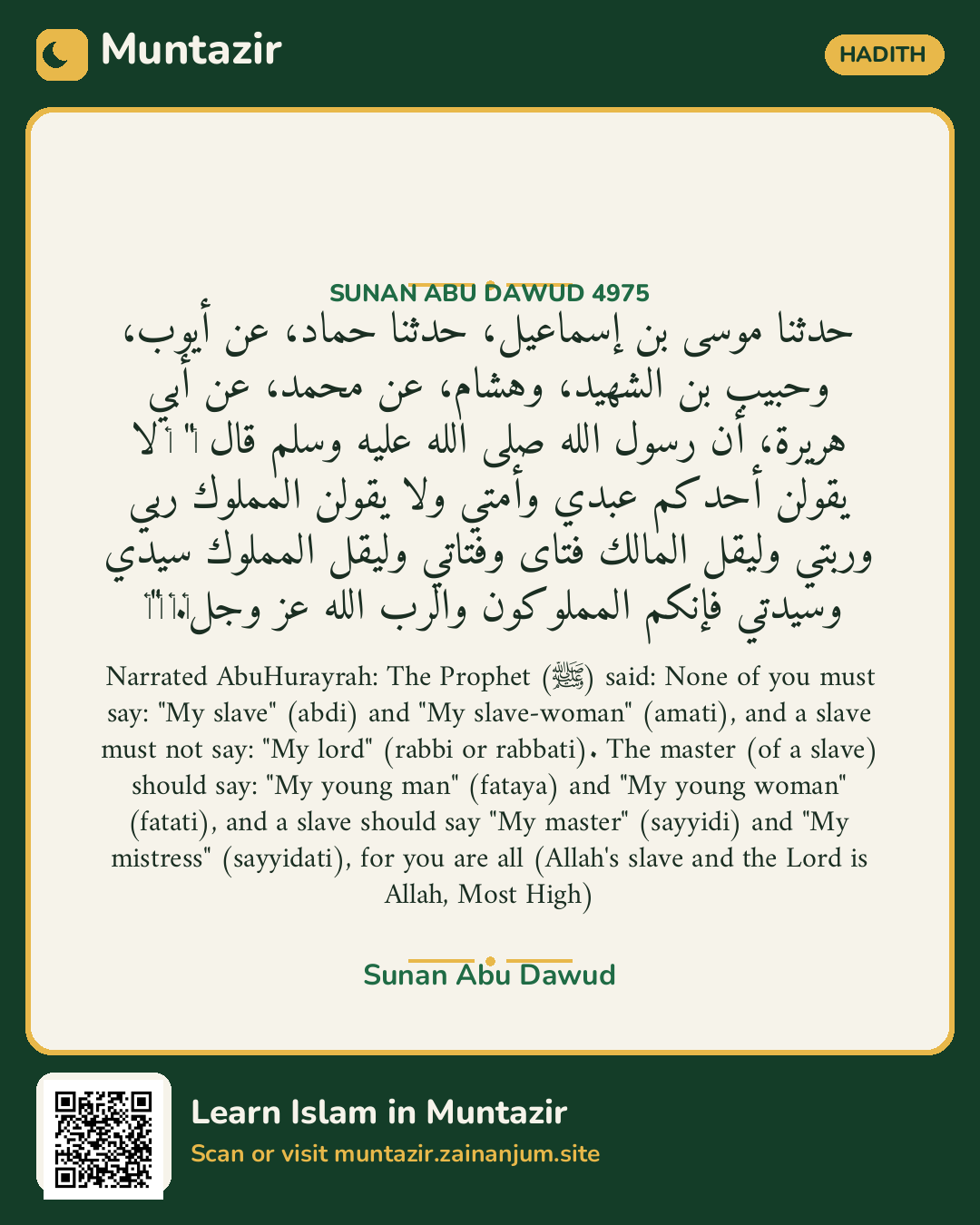
حَدَّثَنَا مُوسَى بْنُ إِسْمَاعِيلَ، حَدَّثَنَا حَمَّادٌ، عَنْ أَيُّوبَ، وَحَبِيبِ بْنِ الشَّهِيدِ، وَهِشَامٍ، عَنْ مُحَمَّدٍ، عَنْ أَبِي هُرَيْرَةَ، أَنَّ رَسُولَ اللَّهِ صلى الله عليه وسلم قَالَ " لاَ يَقُولَنَّ أَحَدُكُمْ عَبْدِي وَأَمَتِي وَلاَ يَقُولَنَّ الْمَمْلُوكُ رَبِّي وَرَبَّتِي وَلْيَقُلِ الْمَالِكُ فَتَاىَ وَفَتَاتِي وَلْيَقُلِ الْمَمْلُوكُ سَيِّدِي وَسَيِّدَتِي فَإِنَّكُمُ الْمَمْلُوكُونَ وَالرَّبُّ اللَّهُ عَزَّ وَجَلَّ " .
Narrated AbuHurayrah: The Prophet (ﷺ) said: None of you must say: "My slave" (abdi) and "My slave-woman" (amati), and a slave must not say: "My lord" (rabbi or rabbati). The master (of a slave) should say: "My young man" (fataya) and "My young woman" (fatati), and a slave should say "My master" (sayyidi) and "My mistress" (sayyidati), for you are all (Allah's slave and the Lord is Allah, Most High)